
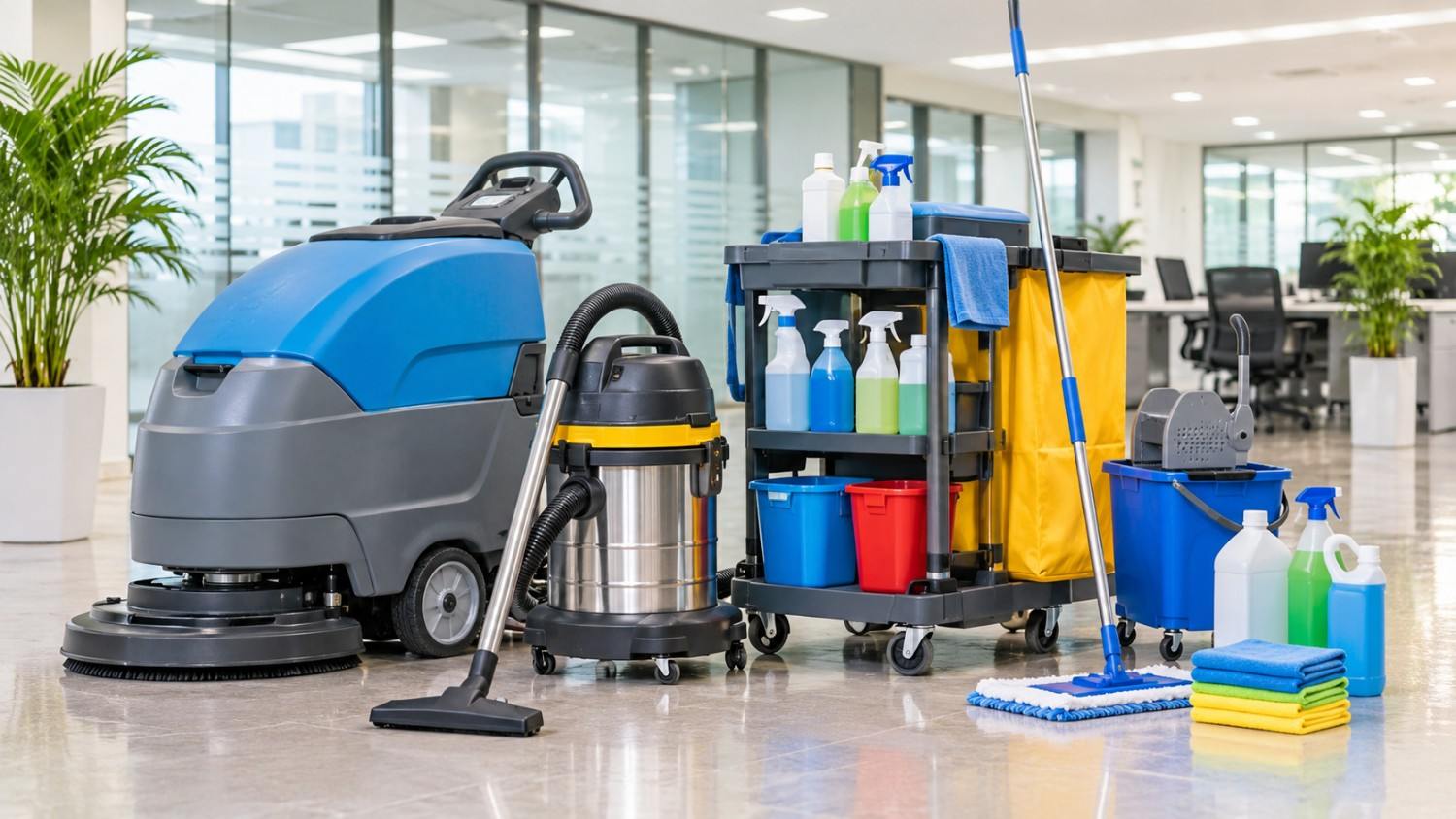
Housekeeping Supplies and Equipment Guide for Bangalore Offices and Facilities
Choosing the right housekeeping supplies and equipment, from floor scrubbers to the chemicals used on different surfaces, affects both cleaning quality and cost. This is a buyer's guide for facility managers and office teams in Bangalore: what professional cleaning teams use and what to check before you buy or hire. For a simple list of what to stock, read our housekeeping supplies checklist instead.
Quick Facts
Who it is for: Facility managers, office administrators and procurement teams in Bangalore.
Covers: Equipment categories, matching equipment to floors, chemical safety, buying or renting, maintenance and choosing a dealer.
Prices: Not listed. Bulk and contract supply are quoted after you share your requirement list.
City: Bangalore.
Provider: EFCS (Excellent Facility Connect Services), 49/1, 1st Main Road, Palace Guttahalli, Bangalore 560003.
Contact: +91 89043 12966 or +91 88480 72224. Monday to Saturday, 10 AM to 7 PM. Sunday by appointment only.
Most buying mistakes come from choosing a machine or chemical before checking the floor, the area and the people who will use it. This guide gives you the questions to ask first.
1. Where can you buy housekeeping supplies in bulk in Bangalore?
There are three common routes in Bangalore. Each suits a different kind of buyer.
| Route | Best for | What to check |
|---|---|---|
| Manufacturers and authorised distributors | Large, regular orders of one product line. | Minimum order quantities and response time for smaller mixed orders. |
| Local dealers and janitorial suppliers | Mixed orders of tools, consumables and small machines. | Product quality, documents and who services the equipment. |
| Facility services companies that also supply | Teams that want supplies, equipment advice and cleaning support. | What is supplied directly, what is arranged through others and written terms. |
EFCS supplies housekeeping tools, equipment and chemicals and also provides cleaning services. See the housekeeping tools and supplies page and housekeeping services.
2. What equipment do professional cleaning teams use?
Professional teams use a mix of machines and manual tools. The right choice depends on the site and its floor types.
| Equipment category | What it does | Typical use | What to check |
|---|---|---|---|
| Floor scrubber-dryers | Scrubs floors and picks up dirty water. | Large open floors, offices, lobbies and warehouses. | Tank size, battery or cable, pad type and cleaning after use. |
| Single-disc floor machines | Rotates a pad or brush for scrubbing and buffing. | Routine floor cleaning and polishing suitable floors. | Pad options, weight, noise and floor suitability. |
| Wet and dry vacuum cleaners | Pick up dust, debris and liquid spills. | Daily cleaning, washrooms and pantries. | Tank size, filter, hose length and ease of emptying. |
| Carpet extraction machines | Spray solution into carpet and extract dirty water. | Office carpets and upholstery. | Tank size, attachments and drying time. |
| Pressure washers | Clean surfaces using high-pressure water. | Parking areas, driveways and outdoor spaces. | Pressure rating, water use and surface suitability. |
| Steam cleaners | Use hot steam to loosen dirt. | Washrooms, kitchens, tiles and fittings. | Heat-up time, tank size and attachments. |
| Janitorial trolleys and carts | Carry tools, chemicals and waste bags. | Daily housekeeping rounds. | Capacity, storage and wheel quality. |
| Manual tools | Mops, wringers, squeegees, brooms and brushes. | Spot cleaning, corners, glass and edges. | Head and handle quality and replacement availability. |
3. How do you match equipment to your site?
Start with the floor type and area, then choose the machine. The right option depends on the actual floor condition and daily use.
| Area | Equipment often used | Reason |
|---|---|---|
| Open office floor or lobby | Scrubber-dryer for large areas; single-disc machine for smaller areas; vacuum for daily dust. | Machines can cover large flat areas more efficiently. |
| Carpeted areas | Vacuum for daily care; extraction machine for periodic deep cleaning. | Dust and stains can sit deep in carpet fibres. |
| Washrooms and pantries | Wet and dry vacuum, steam cleaner and manual tools. | Wet areas and fittings need suitable cleaning methods. |
| Parking and outdoor areas | Pressure washer and heavy brooms. | Outdoor dirt may need high-pressure water. |
| Natural stone or specialist floors | Machine and pad selected after identifying the floor. | Wrong pads or chemicals can damage stone. |
For floor care, read our commercial floor polishing service guide and floor polish comparison guide.
4. What should you check before buying equipment?
- Floor type and area: A machine suited to tile may not suit natural stone or carpet.
- Hours of use: Daily heavy use requires equipment designed for that workload.
- Operator training: Check that staff can operate and clean the machine properly.
- Power, noise and size: Consider battery or cable, noise during office hours and storage space.
- Spare parts and service: Ask where the machine is serviced in Bangalore and how parts are obtained.
- Warranty: Ask what it covers and request the terms in writing.
- Demonstration: Ask to see the machine working on a suitable floor before deciding.
5. Chemical safety basics for housekeeping teams
The wrong chemical can damage a surface or put staff at risk. Follow these basic precautions.
- Ask for the safety data sheet (SDS or MSDS) for every chemical.
- Check that each container has a product label, hazard information and dilution instructions.
- Never mix chemicals. Bleach should never be mixed with acids or ammonia-based products.
- Match the chemical to the surface. Do not use acid on marble or other natural stone.
- Follow the dilution instructions on the label.
- Store chemicals closed, labelled and away from food and heat.
- Provide suitable gloves, eye protection and staff training.
See the cleaning chemical supplies page for the product range. For planning quantities, see our housekeeping supplies checklist.
6. Should you buy, rent or use a cleaning service?
| Option | Best suited to | Considerations |
|---|---|---|
| Buy | Equipment used daily by your own trained staff. | Storage, servicing, operator training and repair costs. |
| Rent | Occasional jobs or short projects. | Availability, rental terms and total hire cost. Ask suppliers whether this option is available. |
| Use a cleaning service | Sites that do not want to manage machines. | Scope, frequency and who supplies consumables. Confirm terms in writing. |
If you need a team rather than equipment, see EFCS housekeeping services or one-time deep cleaning services. EFCS has not stated an equipment rental offer on its supplies page, so ask the team what is available for your site.
7. How do you maintain cleaning equipment?
- Empty and rinse tanks, hoses and filters after use.
- Clean or replace pads and brushes when worn or clogged.
- Check cables, plugs and batteries regularly.
- Keep a simple log of machine use and servicing.
- Arrange maintenance before equipment fails.
- Keep the manual and warranty documents together.
8. What should you ask a housekeeping equipment dealer?
- Can I see a demonstration on a suitable floor?
- Who services this machine in Bangalore?
- How long do repairs and spare parts usually take?
- What does the warranty cover? Can I have the terms in writing?
- Can I get the safety data sheet for each chemical?
- What operator training is provided?
- Can you provide an itemised quote with delivery terms?
9. How does EFCS source and support its supplies?
According to the EFCS housekeeping tools and supplies page:
- Products are sourced from reputable manufacturers and go through quality checks.
- Manufacturer warranties are available on select equipment.
- Demonstrations are available on request.
- After-sales support includes maintenance services for equipment bought through EFCS.
- Delivery is offered across Bangalore.
Ask EFCS for the terms applicable to your items in writing. See the housekeeping tools and supplies range.
10. How does bulk or contract supply work?
Bulk or contract supply starts with an agreed list of items and quantities. To request a useful quote, share:
- Your item list and required quantities.
- The number of sites and approximate floor area.
- Whether the order is one-time or recurring.
- Your floor types and any specialist surfaces.
- Your delivery location in Bangalore.
EFCS can review your requirements and provide a quote. Confirm prices, quantities and delivery terms in writing.
Frequently asked questions
How much do bulk housekeeping supplies cost in Bangalore?
There is no single price. It depends on the items, quantity, brand, pack size and delivery frequency. Send EFCS your item list and quantities and request an itemised written quote.
What chemical safety certifications should I ask for?
Ask for the safety data sheet (SDS or MSDS) for every chemical and check that each container has a label with the product name, hazards and dilution instructions. If a product claims a standard or certification, ask for a copy of the document. EFCS has not published a certification claim on its supplies page.
Should I rent or buy cleaning equipment?
Buying usually suits equipment used every day by trained staff. Renting or using a cleaning service may suit occasional jobs or sites that do not want to maintain machines. EFCS has not stated an equipment rental offer on its supplies page, so ask the team directly about availability.
Which brands are best for offices?
No single brand is best for every office. The right machine depends on floor type, area, daily usage and local service support. Compare options and ask who services the machine in Bangalore and how spare parts are obtained.
How does EFCS source its supplies?
According to the EFCS supplies page, products are sourced from reputable manufacturers and go through quality checks. Manufacturer warranties are available on select equipment, demonstrations are available on request and after-sales support includes maintenance for equipment bought through EFCS. Ask the team for the terms in writing.
Related EFCS guides and services
- Housekeeping tools and supplies in Bangalore
- Housekeeping services
- Housekeeping supplies checklist
- Cleaning chemical supplies
- Carpet shampooing
- Commercial floor polishing service guide
- Floor polish comparison guide
- All EFCS blogs
Disclaimer: This guide is general information. The right equipment, chemical and quantity depend on your site and should be confirmed for your requirements. Always follow the manufacturer's label and safety data sheet.