
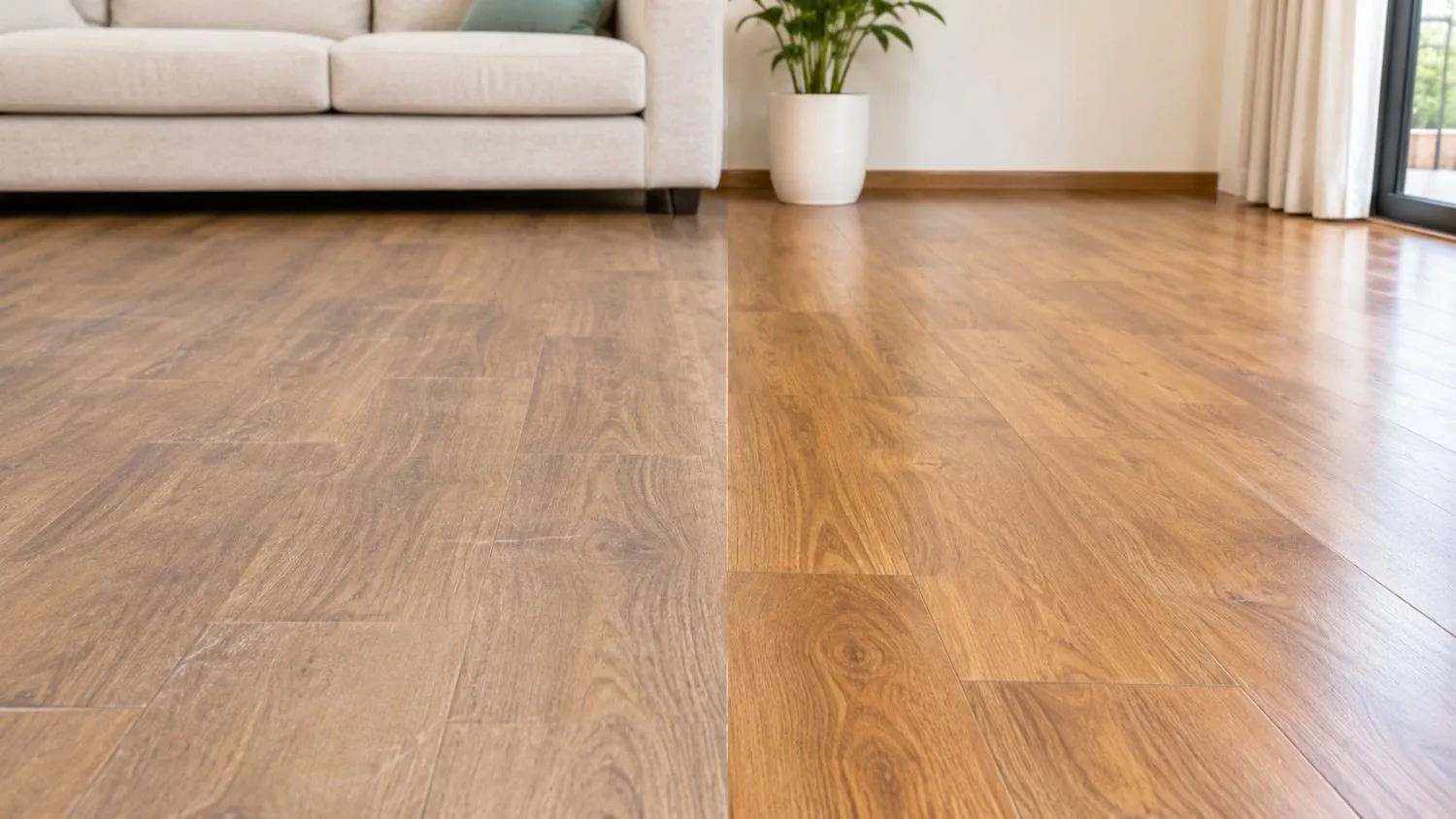
Vinyl floors lose their shine gradually. Dullness, visible scratch patterns and a sticky feel underfoot are the usual signs it is time to repolish. How often depends mainly on foot traffic, and the EFCS vinyl page suggests every 6 to 12 months. Here is how to tell, and what the process involves.
Provider: EFCS (Excellent Facility Connect Services)
Address: 49/1, 1st Main Road, Palace Guttahalli, Bangalore 560003
Phone: +91 89043 12966 / +91 88480 72224
Hours: Monday–Saturday, 10 AM–7 PM; Sunday by appointment only
Repolishing interval: The EFCS vinyl page suggests every 6–12 months, depending on foot traffic and wear
Typical time: A few hours to a full day, depending on area and the work required
Important: Polishing cannot repair cracks, lifting seams or structural damage. The floor type and maker's care instructions must be checked first.
Quote: EFCS provides a quote after inspection. No fixed rate is published here.
This guide is for homeowners, apartment owners and small business owners in Bangalore who want to know when vinyl needs professional attention and what they can do themselves. To see the service, visit the EFCS vinyl floor polishing page.
1. Does your vinyl floor need repolishing? A four-point self-check
Look at the floor in daylight, and again with a lamp or a window light across it from the side. Raking light shows wear that you cannot see from above.
| What to check | What you may notice | What it can mean |
|---|---|---|
| Dull, patchy shine | Walkways look flatter or less even than areas under furniture | Surface wear from regular foot traffic |
| Scratch and scuff patterns | Lines and marks become clearer when light falls across the floor | Repeated friction or movement of furniture and footwear |
| Sticky or tacky feel | The floor feels sticky again soon after mopping | Residue, unsuitable cleaner or a surface-care issue that needs checking |
| Stains or hazy film | Marks or cloudiness remain after normal cleaning | Build-up or discolouration; try a suitable mild clean before assuming polishing is needed |
If you can tick two or more, a professional inspection is worth booking. If you tick only the fourth, try one thorough clean with a mild cleaner first. A floor that has only residue on it may not need polishing.
2. When it is not a polish job: repair or replacement signs
Polishing works on the surface. It cannot fix damage to the structure of the floor. Call for an inspection if you see any of the signs below, because the answer may be a repair.
| Sign | Why polishing may not be enough | What to do |
|---|---|---|
| Cracks, tears or deep gouges | The floor covering is physically damaged | Ask whether the affected area can be repaired or needs replacement |
| Curling edges or lifting seams | The material may be losing adhesion or the joints may be failing | Have the cause checked before any surface treatment |
| Bubbles, soft spots or movement | There may be an issue below the floor covering | Arrange an inspection; do not try to polish it flat |
| Dark patches that return | Moisture, staining or another underlying issue may remain | Identify and address the cause first |
| Faded colour or worn-through pattern | The decorative layer may be damaged beyond surface restoration | Ask whether repair or replacement is the practical option |
The EFCS vinyl page says restoration is a cost-effective alternative to replacement for floors with wear, scratches or discolouration, and that it makes replacement unnecessary in most cases. An inspection tells you which case you have.
3. How often should vinyl floors be polished?
There is no single answer, because foot traffic decides. A hallway or shop floor wears faster than a spare bedroom. The EFCS vinyl page suggests professional polishing every 6 to 12 months, depending on foot traffic and wear.
| Area or condition | Typical wear pattern | What to watch for |
|---|---|---|
| Entrances, corridors and kitchens | Frequent walking, dirt and repeated cleaning | Check for dull paths, scuffs and residue more often |
| Shop floors | Regular customer and staff movement | Monitor high-traffic routes and entrance areas |
| Living and dining areas | Moderate daily use and furniture movement | Look for uneven shine and scratches around furniture |
| Bedrooms and low-use rooms | Less frequent foot traffic | Inspect periodically rather than following a rigid schedule |
| Floors cleaned with harsh products | Surface finish may be affected by unsuitable chemicals | Check the care guide and change to a suitable cleaner |
Do not wait for the whole floor to look bad. Repolishing while the wear is still on the surface is simpler than restoring a floor that has been worn through.
4. Check your vinyl type before you polish
Vinyl is not one product. It comes as sheet, tile and plank, and the surface finish differs between makers. Some floors have a factory-applied wear layer, and some makers advise against adding polish, wax or sealer to certain products.
| Vinyl type | What to check | Before arranging work |
|---|---|---|
| Vinyl sheet | Product finish, seams and manufacturer's cleaning instructions | Check whether the maker permits polishing or any added coating |
| Vinyl tiles | Tile condition, joints and any loose or damaged sections | Identify damaged tiles and confirm the recommended care method |
| Vinyl planks | Wear layer, locking or glued joints and product-specific instructions | Check whether polish, wax or sealer is permitted for that product |
| Unknown product or older floor | Any available receipt, product name or care guide | Share clear photos and let EFCS inspect before deciding on treatment |
If you still have the care guide or the receipt, keep it handy. If you do not, send EFCS clear photos and the name of the product if you know it. EFCS inspects the floor first and assesses the wear, so the work suits the floor you have.
5. What a professional vinyl repolish involves
The EFCS vinyl page describes five stages. Here is what each means for you.
| Stage | What happens | What it checks or achieves |
|---|---|---|
| Inspection | The floor type, condition, wear and problem areas are assessed | Helps decide whether polishing is suitable |
| Deep cleaning | Suitable cleaning removes dirt and surface build-up | Prepares the floor for the next stage |
| Polishing or buffing | The appropriate method is selected for the floor's condition and finish | Addresses suitable surface dullness and wear |
| Sealing or protection | Only considered where the product and maker's guidance allow it | Any finish must be compatible with the vinyl |
| Final check | The treated area is reviewed and care instructions are discussed | Confirms the result and the next steps for use and maintenance |
The EFCS vinyl page says the process typically takes a few hours to a full day, depending on the size of the area and the extent of the cleaning and restoration needed.
How to prepare for the visit
- Clear small items, rugs and loose objects from the floor.
- Point out stains, soft spots, lifted seams and places that worry you.
- Tell EFCS the type of vinyl, if you know it.
- Ask when the floor can be walked on and when furniture can go back, and follow that advice.
6. How to care for vinyl between professional visits
Good daily care keeps a polish looking good for longer. Most of it takes a few minutes.
| When | Care routine |
|---|---|
| Every day or two | Sweep or vacuum regularly, using a vacuum without a hard beater bar |
| Weekly | Damp mop with a mild cleaner and a well-wrung mop; avoid excess water around seams |
| Immediately after spills | Wipe them up promptly and follow the flooring maker's cleaning guidance |
| Every day | Use entrance mats, fit felt pads under furniture legs and lift heavy items rather than dragging them |
| Every few months | Check high-traffic areas for dullness, scratches, sticky patches and lifting edges |
Cleaning products: what to use and what to avoid
- Use a mild, pH-neutral floor cleaner that suits vinyl, diluted as the label says.
- Check your flooring maker's care guide before you buy a new product.
- Avoid abrasive powders, scouring pads and strong solvents.
- Avoid oil-based soaps, which can leave a film.
- Do not add wax or polish unless the maker says the floor is suitable.
- Avoid steam mops unless the maker allows them.
For regular cleaning help at home or in a shop, EFCS also offers housekeeping services. For a guide to floor polishes and finishes in general, read our floor polish comparison guide. Shops and offices can read our commercial floor polishing service guide.
7. Repolish or replace: how to decide
| Floor condition | Likely next step | What to confirm |
|---|---|---|
| Surface dullness, scratches or discolouration | Arrange an inspection to assess whether repolishing is suitable | Confirm the vinyl type and compatible treatment |
| A few damaged tiles or planks | Repair or replace the affected sections; assess the rest separately | Check whether replacement pieces are available and match the existing floor |
| Widespread cracking, lifting or moisture damage | Address the underlying cause and consider replacement | Ask for the base preparation and removal scope |
| Condition is unclear | Send photos and arrange an inspection | Ask for the options and work scope in writing |
When you compare quotes, ask for the same scope in each: the area, the work included and what is done about the base. A replacement quote should include removing the old floor and preparing the base. EFCS quotes after an inspection and does not publish a fixed rate.
A different guide on this site explains the protective coating side of vinyl floor maintenance.
8. How to get an accurate quote
Send EFCS the following details to help the team understand the job:
- Two or three clear photos, including one with light falling across the floor.
- The approximate area in square feet.
- Your location in Bangalore.
- Whether the vinyl is sheet, tile or plank, if you know.
- The problems you see: dull areas, scratches, stickiness or stains.
- Anything that worries you, such as lifted seams or damp patches.
EFCS can then inspect the floor, tell you what it needs and give a quote.
Frequently asked questions
What are the signs that my vinyl floor needs repolishing?
The usual signs are a dull, patchy look in the places people walk most, scratch and scuff patterns that show when light falls across the floor, a sticky or tacky feel that returns soon after mopping, and stains or a hazy film that normal cleaning no longer removes. If you see cracks, tears, curling edges or lifting seams, that is damage rather than wear, and the floor needs repair or replacement instead of polish.
Is repolishing vinyl cheaper than replacing it?
The EFCS vinyl page describes restoration as a cost-effective alternative to replacement for floors with wear, scratches or discolouration, and says it makes replacement unnecessary in most cases. The cost depends on the area, the condition of the floor and the type of vinyl, so EFCS quotes after an inspection and no fixed rate is published here. When you compare, ask for a replacement quote that includes removing the old floor and preparing the base.
How can I care for vinyl floors between professional visits?
Sweep or vacuum regularly, using a vacuum without a hard beater bar. Damp mop with a mild cleaner and a well-wrung mop, because too much water can seep into seams. Wipe up spills quickly. Put mats at entrances, fit felt pads under furniture legs, and lift heavy items rather than dragging them. Keep strong sunlight and hot items off the floor where you can.
What are the best cleaning products for vinyl floors at home?
Use a mild, pH-neutral floor cleaner that suits vinyl, diluted as the label says, and check your flooring maker's care guide first. Avoid abrasive powders, scouring pads, strong solvents and oil-based soaps, which can scratch the surface or leave a film. Do not add wax or polish to a floor unless the maker says it is suitable, and avoid steam mops unless the maker allows them.
How long does a vinyl polish job last?
It depends on foot traffic, how the floor is cleaned and the finish applied. Busy areas such as entrances, kitchens and corridors dull first. The EFCS vinyl page suggests professional polishing every 6 to 12 months depending on foot traffic and wear. Gentle daily cleaning helps a polish last, and harsh cleaners shorten it.
More EFCS guides and services
- Vinyl floor polishing in Bangalore
- Protective coating for vinyl floors
- Floor polish comparison guide
- Commercial floor polishing service guide
- Housekeeping services
- Frequently asked questions
- All EFCS blogs
Disclaimer: This guide is general information. The right care and the right finish depend on the type of vinyl, its condition and the maker's advice, and EFCS confirms them after an inspection. Always check the flooring maker's care guide.