
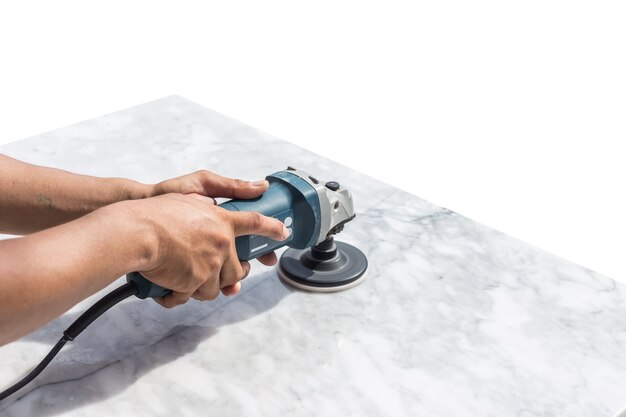
You polish your marble or granite expecting a smooth, mirror-like finish — but instead, you notice:
- Dull patches
- Uneven shine
- Cloudy or blotchy areas
It can be confusing, especially when the polishing process was done correctly.
The truth is, natural stone polishing is not just about technique — it’s about understanding the stone itself.
Every stone has a unique internal structure. Factors like porosity, micro-cracks, fissures, and mineral composition all influence how well a surface can be polished.
Let’s break it down.
What Is Porosity in Natural Stone?
Porosity refers to how much a stone can absorb moisture, chemicals, or polishing compounds.
Natural stone is never completely uniform:
- Some areas are dense and hard
- Others are more porous and absorbent
- Internal variations exist within the same slab
This uneven structure affects how the surface reacts during polishing.
Result:
Even with proper polishing, some areas may shine more while others appear dull.
Why Porosity Matters During Polishing
When polishing compounds are applied:
- Dense areas reflect light better → high gloss
- Porous areas absorb material → lower shine
This leads to:
- Patchy finish
- Swirl marks
- Uneven reflection
Professionals often assess porosity before starting to ensure consistent results.
Micro-Cracks: Small Defects, Big Impact
Micro-cracks are tiny fractures inside the stone that are often invisible to the eye.
They can develop due to:
- Natural formation
- Cutting and installation
- Temperature changes
- Daily wear and pressure
How They Affect Polishing
- Polishing slurry gets trapped inside cracks
- Surface reflection becomes uneven
- Cloudy or dull spots appear
Solution:
Delicate handling, controlled pressure, and specialized polishing methods are required in such areas.
Fissures vs Cracks: Why the Difference Matters
Many people assume fissures and cracks are the same — but they are not.
Fissures
- Naturally occurring lines in stone
- Stable and common in materials like granite
- Usually cosmetic
Cracks
- Caused by stress, impact, or structural issues
- Can worsen over time
- May require repair before polishing
If cracks are not treated properly:
- Polishing results become inconsistent
- Shine breaks along the damaged area
Mineral Composition: The Hidden Factor
Each natural stone has a different mineral mix, which affects polishing results.
For example:
- Quartz-rich stones → polish easily and shine more
- Softer minerals → wear unevenly and absorb compounds
Even within one slab:
- Different mineral zones react differently
- Some areas polish faster than others
This is why professional polishing is never a one-size-fits-all process.
Common Polishing Issues Caused by Stone Structure
If your stone surface looks uneven after polishing, it’s usually due to:
- High porosity in certain areas
- Presence of micro-cracks
- Natural fissures
- Mineral inconsistencies
These are material characteristics, not necessarily polishing mistakes.
How Professionals Handle These Challenges
At EFCS, polishing is done with a surface-specific approach:
- Detailed inspection before polishing
- Adjusting pressure based on stone density
- Using suitable abrasives for different mineral types
- Treating cracks and sensitive areas carefully
- Ensuring uniform finish across the entire surface
Because achieving a perfect shine isn’t about polishing harder — it’s about polishing smarter.
How to Maintain a Consistent Stone Finish
To keep your stone looking polished and even:
✔ Clean regularly with mild solutions
✔ Avoid harsh chemicals that damage the surface
✔ Seal porous stones to reduce absorption
✔ Schedule periodic professional polishing
✔ Address cracks or damage early
Final Thoughts
If your natural stone doesn’t polish evenly, the issue isn’t always the process — it’s the stone’s internal structure.
Remember:
- Porosity affects absorption and shine
- Micro-cracks create dull spots
- Fissures influence surface reflection
- Mineral composition determines polishing behaviour
Understanding these factors helps set the right expectations and ensures better results.
With the right expertise and approach, even complex stone surfaces can achieve a smooth, consistent, and long-lasting finish.
FAQs
Why does my marble look dull even after polishing?
Uneven porosity or micro-cracks can prevent uniform reflection, causing dull patches.
Can all natural stones achieve a high-gloss finish?
Not always. The final finish depends on the stone’s mineral composition and density.
Are fissures a problem in stone?
No, fissures are natural and usually harmless, but they can affect appearance.
Should cracks be repaired before polishing?
Yes. Cracks should be fixed to avoid uneven results and further damage.
How often should stone be polished?
It depends on usage, but high-traffic areas may need polishing every 1–2 years.
Need Professional Help?
EFCS provides floor polishing, tile & grout care, deep cleaning and housekeeping services across Bangalore.
Contact EFCS Call +91 89043 12966