
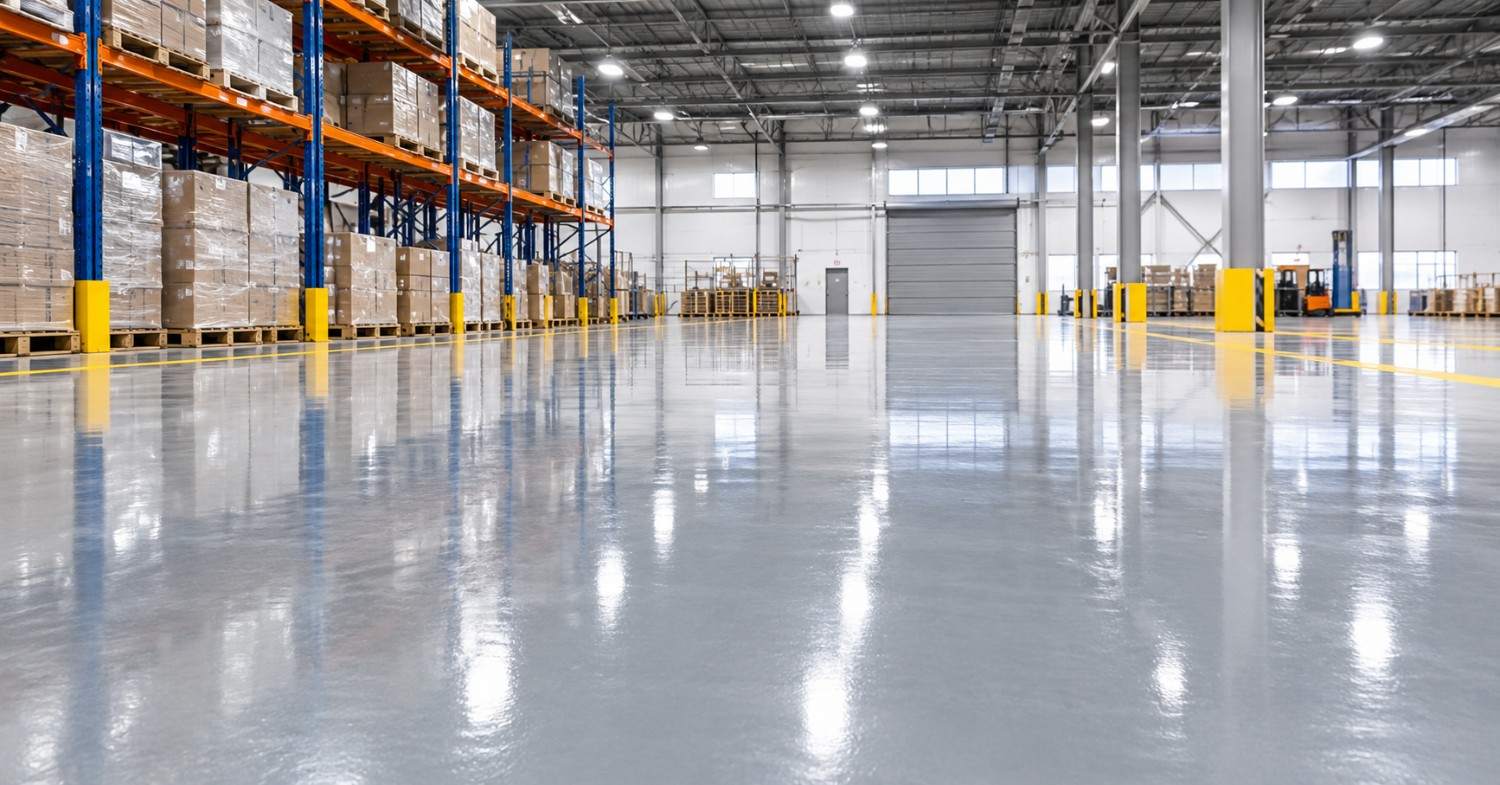
Epoxy floor polishing gives offices, warehouses and industrial spaces a durable, high-gloss finish that withstands heavy foot and equipment traffic. The cost and cure time depend on the floor's condition and the grade of epoxy used. EFCS quotes after a site check, so this guide shows what facility managers should budget and plan for instead of a fixed rate.
Quick facts
- Service: Epoxy flooring and epoxy floor polishing for offices, warehouses and industrial spaces.
- Cost: Quoted after a site check. No fixed rate is published. Section 2 explains what decides it.
- Time: The EFCS epoxy page says a standard coating job typically takes 2 to 4 days including curing. It depends on floor size and condition. See Section 5 for cure stages.
- City: Bangalore.
- Provider: EFCS (Excellent Facility Connect Services), 49/1, 1st Main Road, Palace Guttahalli, Bangalore 560003.
- Contact: +91 89043 12966 or +91 88480 72224. Monday to Saturday, 10 AM to 7 PM. Sunday by appointment only.
This guide is written for facility managers who need to budget for an epoxy floor and plan the work around operations. To see the service itself, go to the EFCS epoxy floor polishing page.
1. Epoxy coating or epoxy polishing: what is the difference?
People use the two terms together, but they are different jobs, and the difference changes your quote.
| Job | What it is | When you need it |
|---|---|---|
| Epoxy coating (new epoxy floor) | A resin layer is applied over a prepared floor. It forms a seamless, protective surface. | A new or worn floor, such as bare concrete, that needs a durable finish. |
| Epoxy polishing (gloss restoration) | An existing epoxy floor is worked to remove surface marks and bring back the shine. | An epoxy floor that has gone dull from traffic and cleaning. |
| Both | Prepare, coat, let it cure, then polish and finish. | A new floor where a high-gloss finish is wanted. |
When you ask for a quote, say which of the three you need. A quote for coating only and a quote for coating and polishing are not comparable.
2. What decides the cost of epoxy flooring?
Epoxy flooring is normally quoted per square foot, after the floor is checked. The rate is not the same for every site. These are the factors.
| Factor | Why it matters | Effect on the cost |
|---|---|---|
| Floor condition | A sound, flat floor needs less preparation. Cracks, oil, old coatings and uneven areas need repair or grinding first. | More preparation, higher cost |
| Area and layout | A large open warehouse is set up once. Many small rooms, corners and columns take more time. | Can raise or lower the rate per sq ft |
| Epoxy grade and system | A light-duty office system and a heavy-duty industrial system use different materials and build-up. | Heavier systems cost more |
| Finish | A high-gloss finish needs more steps than a standard finish. | Can raise the cost |
| Traffic and chemicals | Forklifts, pallet trucks, oils and cleaning chemicals call for a tougher system. | Heavier use, higher cost |
| Working hours and access | Night or phased work around operations, and access to the area, change how the job is planned. | May add cost |
| Cure and downtime | A longer cure or more phases means more days on site. | May add cost |
EFCS does not publish a fixed rate, because two floors of the same size can need very different work. Send photos and the approximate area, and the team will quote after checking.
3. Commercial or industrial grade: which does your site need?
The grade is chosen by what the floor must carry and resist. This is a general guide, not a specification. EFCS recommends a system after the site check.
| Commercial grade | Industrial grade | |
|---|---|---|
| Typical sites | Offices, showrooms, retail, light storage, corridors, car parks. | Warehouses, factories, workshops, loading bays, cold or wet process areas. |
| What it carries | Foot traffic, trolleys, light equipment. | Forklifts, pallet trucks, heavy machinery, constant movement. |
| What it resists | Scuffs, normal cleaning, light spills. | Abrasion, impact, oils and many chemicals, depending on the system. |
| Look | Often chosen for a clean, glossy look. | Chosen first for durability, with gloss as a second goal. |
| Ask the applicator | Which system, how many coats, and how the finish is kept clean. | Which system, build-up, chemical resistance, and a written cure time before heavy loads. |
Mixed use is common, for example an office floor next to a warehouse. Say so in your enquiry. If your floor is plain concrete and you are choosing between epoxy and polished concrete, see concrete floor polishing.
4. How is an epoxy floor applied? The process, step by step
Preparation decides how long an epoxy floor lasts. These are the steps, in order.
- Site check and consultation. The team looks at the floor, its use, the area and any moisture, oil or cracks, and recommends a system.
- Surface preparation. The floor is cleaned and, where needed, ground so the epoxy can bond. Cracks and holes are repaired. Ask how moisture in concrete is checked.
- Primer and epoxy application. The resin is mixed to the maker's instructions and applied in an even layer, with extra coats where the system needs them.
- Curing. The floor is left undisturbed while the epoxy hardens. This is the stage that decides when you can use the floor again (see Section 5).
- Polishing and finishing. After the epoxy has cured, the surface is polished to improve the gloss and smoothness.
- Final inspection and care guidance. The team checks the finish and gives guidance on cleaning and care.
EFCS describes the same stages on its epoxy floor polishing page. This guide adds the detail and the planning points.
5. How long does epoxy flooring take to cure?
Cure time is the first question facility managers ask, because it decides when the area can reopen. Two different times matter: how long the job takes on site, and how long the floor needs before it carries load.
| Stage | What it means | Planning note |
|---|---|---|
| Job on site | The EFCS epoxy page says a standard coating job typically takes 2 to 4 days, including curing. It depends on the floor size and condition. | Larger or damaged floors can take longer. Ask for the timeline for your site in writing. |
| Light foot traffic | Many epoxy systems allow careful walking after about a day. | Keep trolleys, equipment and spills off the floor. |
| Full cure for heavy loads and chemicals | Often around a week, depending on the product, the room temperature and the thickness. | Plan forklifts and heavy loads for after this stage. |
These stages are general. The product data sheet and the applicator decide the real times for your floor, and cooler or damp conditions can slow curing. Always ask for the cure times of the exact system in writing.
How to plan around cure time
- Work in zones or phases, so part of the site stays in use.
- Schedule the job at night, on a weekend or during a shutdown, if your operations allow it.
- Plan alternate routes for staff and equipment while an area cures.
- Keep the heaviest traffic and equipment for the last zone to reopen.
- Mark cured and uncured zones clearly with barriers and signs.
6. How long does an epoxy floor last, and what shortens its life?
The EFCS epoxy page says an epoxy floor can last 10 to 20 years, depending on traffic, maintenance and conditions. Treat that as the best case, not a promise. These shorten the life:
- Poor preparation or moisture in the concrete.
- Heavy impact, dragged pallets or sharp equipment.
- Chemical spills beyond the system's resistance.
- Harsh cleaners or abrasive pads.
- Direct sunlight, which can yellow some epoxy types.
See the EFCS epoxy floor polishing page for the service details.
7. How do you maintain an epoxy floor?
- Sweep or dust-mop regularly to remove grit.
- Use a mild cleaner and avoid abrasive pads.
- Wipe spills promptly, especially chemicals.
- Use mats or protective pads where heavy equipment moves.
- Inspect the floor and arrange repairs for chips or damaged areas.
- Re-polish when the gloss fades, if the system and condition call for it.
EFCS lists inspection, cleaning and minor repairs as part of its epoxy maintenance service. For routine cleaning teams, see EFCS housekeeping services.
8. How does epoxy compare with other floor finishes?
This is a general comparison. The right choice depends on your floor and use. Compare quotes on the same scope and the same expected life.
| Finish | How it works | Often considered when |
|---|---|---|
| Epoxy flooring | A resin coating on a prepared floor. Seamless and protective. | You need a sealed, easy-to-clean surface that resists spills and wear. |
| Polished concrete | The existing concrete is ground, densified and polished. No coating layer. | The slab is sound and you want a hard, glossy surface without a coating. |
| Vinyl flooring | A manufactured surface laid over the floor. | Lighter-use areas where a laid surface is preferred. |
| Liquid terrazzo | A resin-based decorative finish. | A decorative look is the main goal. |
Read more: concrete floor polishing, vinyl floor polishing, liquid terrazzo flooring guide, commercial floor polishing service guide and mosaic floor polishing: process, time and cost factors.
9. How do you get an accurate epoxy flooring quote?
Send EFCS the following details to help the team understand the job before a site check:
- Two or three clear photos of the floor.
- Approximate area in square feet.
- Site type and the equipment or traffic the floor must handle.
- Existing floor type and whether it already has a coating.
- Hours or days the area can be closed, and your deadline.
- Your area in Bangalore.
EFCS can then recommend a system and give a quote after a site check. For recurring facility work, ask about a periodic maintenance arrangement.
Frequently asked questions
What is the difference between epoxy floor polishing and regular floor polish?
Regular floor polish is applied to or worked into an existing surface such as stone, tile or concrete. Epoxy flooring is a resin coating that is applied to a prepared floor and forms a seamless layer. Polishing an epoxy floor restores or improves its gloss. Because the two are different jobs, ask for the scope in writing: coating, polishing, or both.
How long does an epoxy floor last?
It depends on the traffic, the grade of epoxy, how well the floor was prepared and how it is maintained. The EFCS epoxy page says an epoxy floor can last 10 to 20 years under the right conditions. Heavy forklift traffic, chemical spills and poor preparation can shorten that. Ask for the expected life of your system in writing.
How long before we can walk on a new epoxy floor?
It depends on the product. Many epoxy systems allow light foot traffic after about a day, but reaching full strength for heavy loads and chemicals usually takes longer, often around a week. The product data sheet and the applicator decide. EFCS says a standard coating job typically takes 2 to 4 days including curing, depending on floor size and condition. Confirm the timeline for your floor in writing.
How do I maintain an epoxy floor?
Sweep or dust-mop regularly, mop gently with a mild cleaner, wipe up chemical spills quickly, and avoid harsh chemicals and abrasive tools. Use mats or protective pads where heavy equipment moves. The EFCS epoxy page also lists routine inspections and minor repairs as part of its maintenance service.
How does the cost of epoxy compare with other finishes?
There is no single answer, because the price depends on the area, the floor condition, the system and the finish you choose. Epoxy adds a coating on top of the floor, while concrete polishing works the existing concrete. Compare quotes on the same scope, the same area and the same expected life, and ask what each option needs for maintenance.
More EFCS guides and services
- Epoxy floor polishing in Bangalore
- Concrete floor polishing
- Vinyl floor polishing
- Commercial floor polishing service guide
- Floor polish comparison guide
- Liquid terrazzo flooring guide
- Mosaic floor polishing: process, time and cost
- Housekeeping services
- All EFCS blogs
This guide is general information. The system, the cost and the cure time depend on your floor and the product used, and are confirmed by EFCS after a site check. Always follow the product data sheet.